Roof Leak Repair - Jacksonville Metro
Roof Leak Repair in Saint Augustine, FL
Saint Augustine roofs take the same Florida beating as the rest of the metro, and local crews run A1A and US-1 daily. One call connects you with an independent roofer who works St. Johns County every week.
Serving Jacksonville and 10 nearby cities Open 24/7 for emergencies
Roof leak repair in Saint Augustine means tracing the true entry point, usually at flashing, valleys, vent boots, or lifted shingles, and sealing the source instead of just covering the stain. Call (725) 765-9243 and we will connect you with a local contractor who covers Saint Augustine.
What causes roof leaks in Saint Augustine homes?
Roof leak repair in Saint Augustine means tracing the true entry point, usually at flashing, valleys, vent boots, or lifted shingles, and sealing the source instead of just covering the stain.
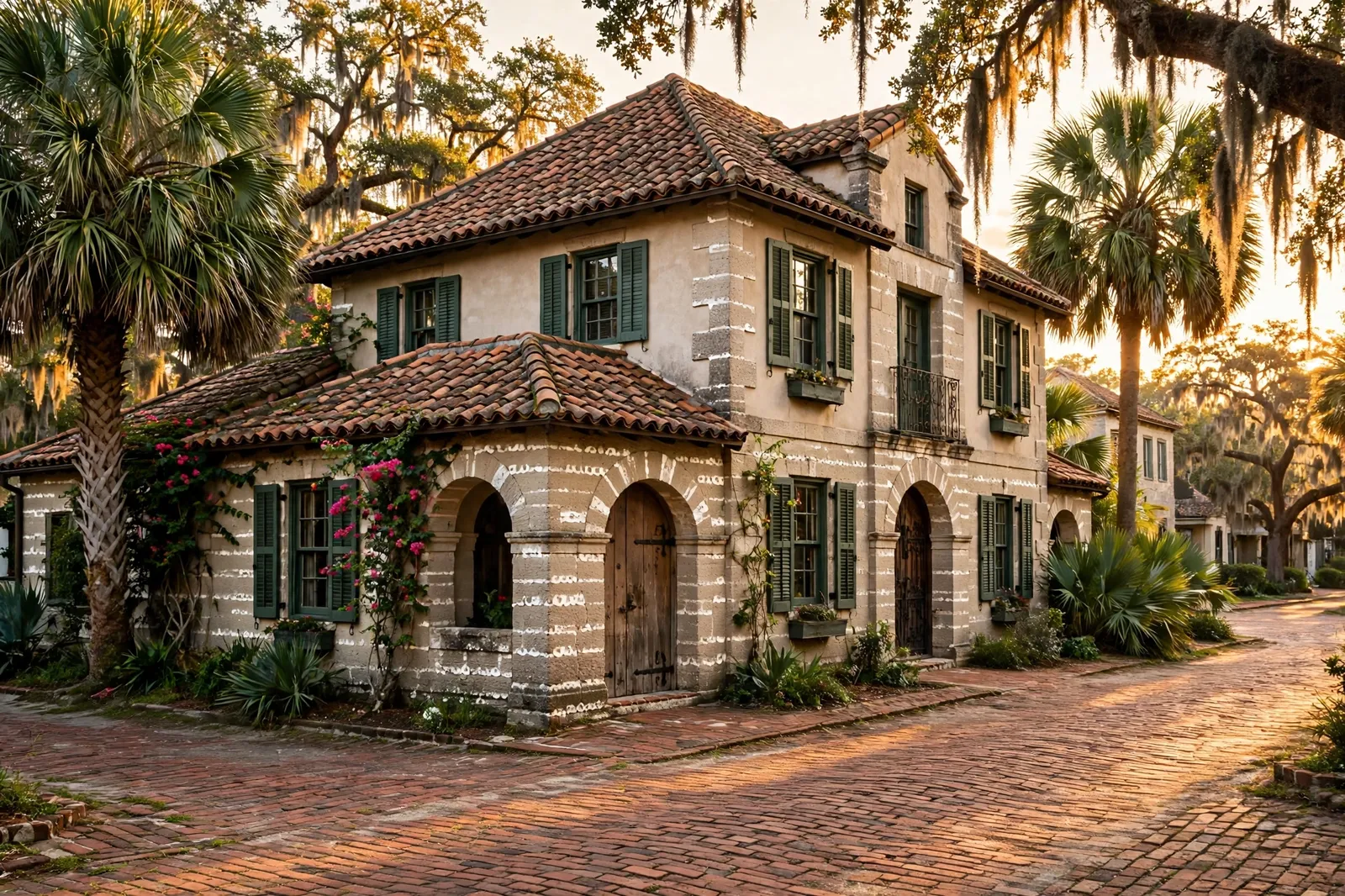
Saint Augustine housing spans historic-district homes with tile and metal roofs, mid-century neighbourhoods west of US-1, and newer communities toward the county edges. Salt air, a dense historic tree canopy, and nor'easters that push rain for days shape roof wear in Saint Augustine. Historic-district rules can also govern visible materials and colours.
- Entry-point tracing from attic stain to roof opening
- Flashing reseals at chimneys, walls, dormers, and skylights
- Valley repairs where debris holds water against the metal
- Vent boot and pipe flashing replacement
- Shingle course replacement around the entry point
- Water testing of the finished repair before sign-off
The roofer starts in the attic with a light, reading the stain trail on the decking and following it upslope. On the roof, the crew lifts the courses around the suspected entry point, checks the underlayment, and reseals or replaces the failed component. The repair finishes with a controlled water test from a hose, run from the eave upward until the entry point proves dry.
A stain in one room rarely sits under the hole. Water runs along decking and rafters before it drips, so honest leak work starts with tracing, not patching.
Neighbourhood-level detail for World Golf Village sits on the Roof Leak Repair in World Golf Village page.
How much does leak repair cost in Saint Augustine?
Minor roof leak repair in Saint Augustine costs $350 to $1,200, and larger work costs $1,200 to $3,500.
The entry point sets the price. A split vent boot is a low-end repair. A failed valley or chimney flashing rebuild costs more because courses come off and go back on in sequence. Attic access, pitch, and how long the leak ran before detection move the figure inside each range.
Salt air, a dense historic tree canopy, and nor'easters that push rain for days shape roof wear in Saint Augustine. Historic-district rules can also govern visible materials and colours. The roofer states the exact price after inspection and before any work starts.
Metro-wide material ranges sit in the Jacksonville roof replacement cost guide for homeowners weighing this work against replacement.
Is water entering now?
Active water entry requires belongings to be moved away, water to be contained where safe and a roofing call before the next rainfall.
Can a leak wait, or is it an emergency in Saint Augustine?
A growing stain means water is still moving. Every rain cycle pushes moisture further into decking, insulation, and drywall, and a minor repair can become a larger one within weeks. Active leaks get emergency priority; a stain that has not changed in months still needs tracing before the next storm season.
Calls from Saint Augustine route along A1A and US-1, past the Bridge of Lions. The specialist records the address, the roof type, and whether water is entering, then matches the call to a roofer whose regular rounds include Saint Augustine.
Call (725) 765-9243 first for urgent roof leak repair needs in Saint Augustine.
Leaks in Saint Augustine usually enter at interruptions in the field: vent stacks, chimneys, wall junctions, skylights, and valleys. The field itself rarely fails first. Sun splits the rubber boots, storm wind lifts the tabs above the stain, and debris dams push water sideways into seams that were never designed to hold standing water.
How do roofers trace a leak in Saint Augustine?
One traced leak on a sound roof is a repair. Leaks appearing at several unrelated points in the same season usually mean the surface itself is at end of life, and replacement becomes the honest recommendation. Soft or stained decking found during tracing also pushes the scope from seal work into repair or replacement.
Saint Augustine housing spans historic-district homes with tile and metal roofs, mid-century neighbourhoods west of US-1, and newer communities toward the county edges.
Most Saint Augustine calls for roof leak repair come from historic stock plus mid-century and newer growth. Crews running A1A and US-1 see the same streets every week, so the local failure patterns are the first things the inspection checks rather than late discoveries.
Minor work of this kind typically needs no permit in St. Johns County. Structural deck work and full replacement need a St. Johns County permit under the Florida Building Code, and the roofer pulls the permit and schedules the inspections before work starts.
A pre-work survey through roof inspection in Saint Augustine, FL documents the roof before work starts.
The introduction is the whole of what this site does in Saint Augustine: a specialist takes the call, records the roof problem, and connects the homeowner with an independent roofer covering that part of St. Johns County. The roofer inspects, quotes, and does the work. Call (725) 765-9243 to start.
Roof Leak Repair in Saint Augustine neighbourhoods
Neighbourhood-level pages sit under this Saint Augustine page, so local searches land on local content.
More services in Saint Augustine
Roof Repair in Saint AugustineLeak repair, shingle replacement, and flashing work with published price rangesRoof Inspection in Saint AugustineEvery slope, the flashing, and the attic, with dated photos and a written summaryEmergency Roof Repair in Saint AugustineTarping and urgent securing when water is entering, day or nightRoof Replacement Cost in Saint AugustinePublished ranges and the factors that move a quote, so any price can be checkedHow It Works
How do you book through this site?
1
Call
Call (725) 765-9243 and describe the problem: a leak, storm damage, an aging roof, or a cost question.
2
Get connected
We connect you with an independent roofing contractor who covers your part of the Jacksonville metro.
3
Get your roof assessed
The contractor inspects the roof and gives you their price and timeline directly. You decide whether to go ahead.
Roof Leak Repair questions from Saint Augustine homeowners
Policies cover leaks caused by sudden events such as storm damage or a fallen limb. Slow leaks from worn flashing or age sit outside cover in most Florida policies. Dated photos of the damage and a written tracing report support the claim file either way. The tracing report names the component that failed, which is the detail insurers and buyers both ask for. In Saint Augustine, salt air, a dense historic tree canopy, and nor'easters that push rain for days shape roof wear in Saint Augustine.
A tarp or bucket buys time, and roofing cement on an obvious lifted tab can slow a drip for one storm. Most DIY seals fail because the entry point is not where the stain is. If the stain grows or returns after rain, the leak needs professional tracing before decking damage spreads. A water test result is recorded on the job file, so the repair is proven, not assumed.
Tracing and sealing a single entry point usually finishes in one visit of 2 to 4 hours. Valley and flashing rebuilds take most of a day. If the tracing finds deck damage, the roofer explains the added scope and price before any extra work begins.
A specialist records the address, the stain location, and when the leak appears. The specialist connects the homeowner with an independent roofer serving Saint Augustine who traces and seals the entry point. My Jacksonville Roofer is a connection service, not a roofing company.
Tracing and sealing a single entry point in Saint Augustine usually falls in the minor repair range of $350 to $1,200. A valley or flashing rebuild sits in the larger range of $1,200 to $3,500. The roofer confirms the exact figure after the entry point is found, because the entry point sets the scope.