Hail Damage Roof Repair - Jacksonville Metro
Hail Damage Roof Repair in Doctors Inlet, Orange Park FL
Doctors Inlet homes sit under the Orange Park side of the metro, and their roofs follow the local pattern: inlet moisture is the doctors inlet factor: damp north slopes, early algae streaking, and storm winds that arrive straight off doctors lake. One call connects you with an independent roofer who covers the area.
Serving Jacksonville and 10 nearby cities Open 24/7 for emergencies
Hail damage roof repair in Doctors Inlet covers bruised and fractured shingles, dented metal panels and vents, and cracked tiles after hail events, verified by hands-on inspection rather than ground photos. Call (725) 765-9243 and we will connect you with a local contractor who covers Doctors Inlet.
What does hail do to roofs in Doctors Inlet?
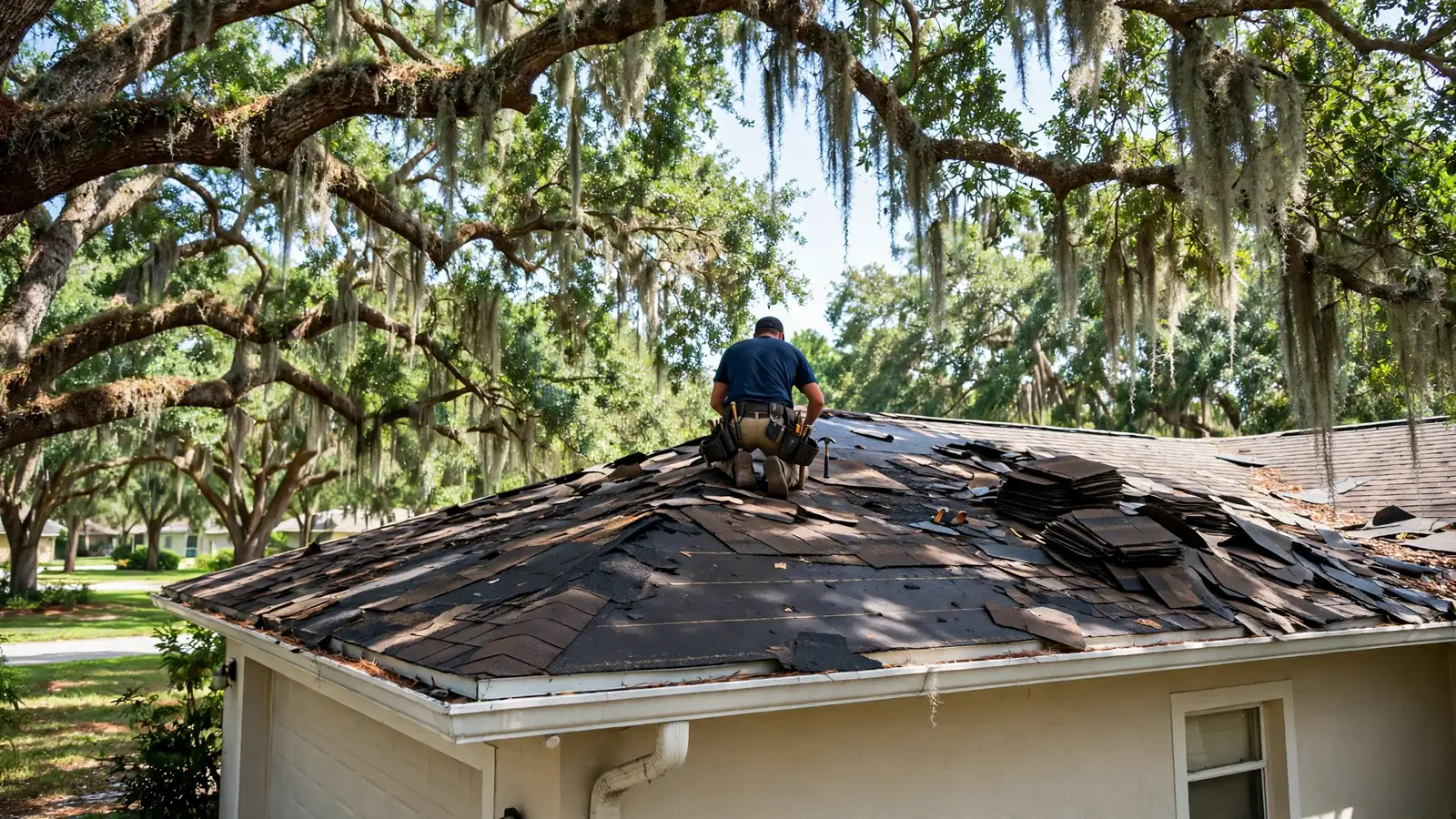
Hail work in Doctors Inlet begins with proof, not repairs. The roofer chalks a test square on each slope, counts and photographs the fractures, and checks gutters and soft metals for the corroborating dents that separate a hail event from ordinary wear. Genuine fracture damage is scoped for repair or replacement support; cosmetic marks are reported as cosmetic, in writing.
Doctors Inlet homes are waterfront and near-water houses along the inlet, from 1960s ranch homes to newer custom builds. Inlet moisture is the Doctors Inlet factor: damp north slopes, early algae streaking, and storm winds that arrive straight off Doctors Lake.
The wider Orange Park pattern, including costs and scheduling, sits on the Hail Damage Roof Repair in Orange Park, FL page.
Northeast Florida hail is usually small, but spring and early summer storms occasionally drop stones large enough to bruise shingle mats and dent metal. Damage concentrates on the slopes facing the storm and on softer materials: caps, vents, and older shingles with little granule cover left.
How much does hail damage repair cost in Doctors Inlet?
Minor hail damage roof repair in Doctors Inlet costs $350 to $1,200, and larger work costs $1,200 to $3,500.
Hail pricing in Doctors Inlet starts at zero: the inspection and test-square report come first, and if the marks are cosmetic, the honest price of repair is nothing. Genuine fracture damage prices like the underlying work, section repair at the low end and replacement support at the high end, with the report doing the talking to the carrier.
City-level pricing context for Orange Park sits on the Hail Damage Roof Repair in Orange Park page. Every figure here is a range on purpose: the written quote after inspection is the exact number.
Is the ceiling stain growing?
A growing ceiling stain shows that water remains active or moisture continues moving through nearby materials.
How is hail damage checked in Doctors Inlet?
Hail evidence in Doctors Inlet fades on a schedule the homeowner does not control. Granules wash, fractures oxidise, and the storm date that anchors a claim recedes. The inspection belongs in the first weeks, while the roof can still tell its own story.
Coverage in Doctors Inlet runs along the inlet roads off College Drive and Doctors Lake Drive. When a call comes in, the address goes to a roofer who works this neighbourhood as part of a regular round, not as a one-off trip across the metro.
Homeowners in Doctors Inlet comparing options can also read the Roof Replacement Cost in Doctors Inlet page for the neighbouring topic.
The introduction is the whole of what this site does in Doctors Inlet: a specialist takes the call, records the roof problem, and connects the homeowner with an independent roofer covering that part of Clay County. The roofer inspects, quotes, and does the work. Call (725) 765-9243 to start.
Hail Damage Roof Repair near Doctors Inlet
Doctors Inlet sits under the Orange Park city page. Nearby neighbourhoods have their own hail damage roof repair pages in the same cluster.
Lakeside Hail damage roof repairEagle Harbor Hail damage roof repairPace Island Hail damage roof repairArgyle Forest Hail damage roof repairOakleaf Plantation Hail damage roof repairDoctors Inlet Hail damage roof repairOrange Park South Hail damage roof repairBellair-Meadowbrook Terrace Hail damage roof repair
How It Works
How do you book through this site?
1
Call
Call (725) 765-9243 and describe the problem: a leak, storm damage, an aging roof, or a cost question.
2
Get connected
We connect you with an independent roofing contractor who covers your part of the Jacksonville metro.
3
Get your roof assessed
The contractor inspects the roof and gives you their price and timeline directly. You decide whether to go ahead.
Hail Damage Roof Repair questions from Doctors Inlet homeowners
The inspection and claim-ready report in Doctors Inlet sits in the $150 to $400 range. Section repairs for fractured shingles fall in the repair ranges of $350 to $1,200 or $1,200 to $3,500 depending on spread. Slope-wide functional damage usually proceeds as a replacement through the claim, quoted in writing.
Usually not. Hail bruises hide under intact-looking granules, and the fracture is in the mat underneath. Ground photos miss it, and door-knock opinions given from the street are not evidence. The hand-feel test inside chalked squares is the standard the claim process recognises.
Most Florida policies cover hail as a sudden event. The claim stands on documented hit density per slope and mat fracture, plus corroborating soft-metal dents. The written report supplies all three. Cosmetic marks without fracture are commonly denied, and the report says so honestly when that is the finding.
Stones around an inch and above can fracture older or thinner shingles; newer architectural shingles resist more. Condition matters as much as size: a worn roof bruises under hail that a new roof shrugs off. The inspection records both the hits and the roof's prior condition. Soft-metal dents on vents and gutters corroborate the shingle findings; they are photographed as found.
Then the report documents cosmetic marks only, with photos, and recommends monitoring. The homeowner keeps the dated report, which still has value: it proves the roof's condition after that storm for any future claim or sale conversation. A cosmetic-only report is still valuable documentation of the roof's condition on that date.