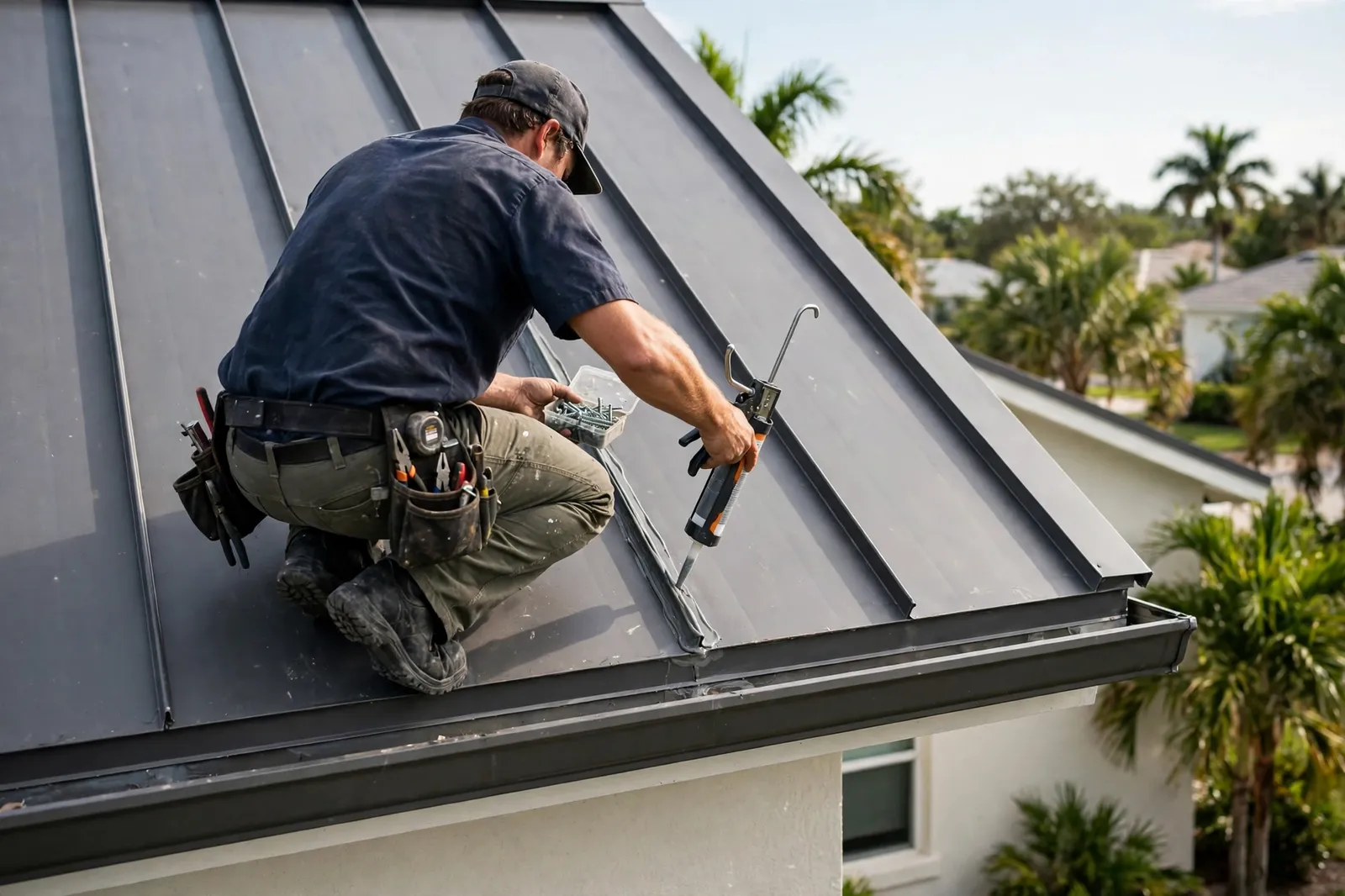
Metal Roof Repair - Jacksonville Metro
Metal Roof Repair in Oceanway, Jacksonville FL
Oceanway homes sit under the Jacksonville side of the metro, and their roofs follow the local pattern: oceanway's open lots and pine stands mean wind exposure and needle load at the same time, and its new builds are hitting their first sealant cycle. One call connects you with an independent roofer who covers the area.
Serving Jacksonville and 10 nearby cities Open 24/7 for emergencies
Metal roof repair in Oceanway covers loose and backed-out fasteners, failed seam sealant, rust treatment at cut edges, flashing renewal, and panel patching on standing seam and exposed-fastener roofs. Call (725) 765-9243 and we will connect you with a local contractor who covers Oceanway.
What metal roof repairs are most common in Oceanway?
Repairing metal in Oceanway starts with identifying the system, because standing seam and exposed-fastener roofs fail in opposite places. Seam roofs need seam, clip, and closure work; screwed roofs need their fastener pattern renewed in full rows with oversized gasketed screws. Rust is treated to sound metal, and coatings are quoted only after the mechanical work, never instead of it.
Oceanway mixes older rural homes on large lots with fast-growing new subdivisions on the north side. Oceanway's open lots and pine stands mean wind exposure and needle load at the same time, and its new builds are hitting their first sealant cycle.
Oceanway is one of sixteen Jacksonville neighbourhoods with its own page for this service. The metro picture sits on the Metal Roof Repair in Jacksonville, FL pillar.
Thermal movement works fasteners loose a fraction at a time over thousands of heat cycles. Sealant at seams ages out in 15 to 20 years of Florida sun. Scratches and cut edges rust first near salt air, and storm debris dents panels and cracks seams.
How much does metal roof repair cost in Oceanway?
Minor metal roof repair in Oceanway costs $350 to $1,200, and larger work costs $1,200 to $3,500.
Metal repair in Oceanway is priced by stage: the mechanical renewal (fasteners, seams, closures) as one figure, rust treatment as another, and any coating as a third, optional stage. A single figure for all three hides where the money goes. Access and roof height move each stage the same way they move any roof work.
Metro pricing context sits in the Jacksonville roof replacement cost guide. The roofer states the exact price after inspection and before any work starts.
Is the ceiling stain growing?
A growing ceiling stain shows that water remains active or moisture continues moving through nearby materials.
What are the signs a metal roof in Oceanway needs repair?
A metal roof in Oceanway that has started leaking at its fasteners is on a clock measured in seasons, not years. Each summer of movement backs more screws out. The audit is cheap; the decking repair under a neglected seam roof is not.
In Oceanway, calls route along North Main Street and New Berlin Road. The specialist records the address and the roof problem, then matches the call to a roofer whose regular rounds include the area.
Homeowners in Oceanway comparing options can also read the Roof Inspection in Oceanway page for the neighbouring topic.
My Jacksonville Roofer is a connection service, not a roofing company. The service connects the homeowner with an independent roofer serving Oceanway in Duval County. One call to (725) 765-9243 starts the process.
Metal Roof Repair near Oceanway
Oceanway sits under the Jacksonville metro pillar. The other fifteen neighbourhoods have their own metal roof repair pages in the same cluster.
Mandarin Metal roof repairRiverside Metal roof repairSan Marco Metal roof repairSouthside Metal roof repairArlington Metal roof repairOrtega Metal roof repairAvondale Metal roof repairBaymeadows Metal roof repairOceanway Metal roof repairNocatee Metal roof repairMurray Hill Metal roof repairSpringfield Metal roof repairDeerwood Metal roof repairBartram Park Metal roof repairNorthside Metal roof repairWestside Metal roof repair
Up the cluster
Metal Roof Repair in JacksonvilleThe metro pillar page for this serviceRoof Replacement Cost in JacksonvillePublished ranges for the whole metroRelated help
Roof Replacement Cost in WestsideWhat a new roof costs in that part of JacksonvilleMetal Roof Repair in WestsideSame service in a neighbouring areaMetal Roof Repair in MandarinSame service in a neighbouring areaMetal Roof Repair in OrtegaSame service in a neighbouring areaRoof Inspection in OceanwayEvery slope, the flashing, and the attic, with dated photos and a written summaryRoof Inspection in OceanwayDocumented survey with dated photosHow It Works
How do you book through this site?
1
Call
Call (725) 765-9243 and describe the problem: a leak, storm damage, an aging roof, or a cost question.
2
Get connected
We connect you with an independent roofing contractor who covers your part of the Jacksonville metro.
3
Get your roof assessed
The contractor inspects the roof and gives you their price and timeline directly. You decide whether to go ahead.
Metal Roof Repair questions from Oceanway homeowners
Localised seam, flashing, and fastener repairs in Oceanway sit in the minor repair range of $350 to $1,200. A full fastener-pattern replacement with seam resealing across the roof sits in the larger range of $1,200 to $3,500. The written quote follows a row-by-row roof check.
Metal expands in the afternoon heat and contracts at night. Over thousands of cycles the movement walks screws upward and wears the hole wider. Replacing backed-out screws with oversized sealed fasteners, on a documented pattern, is the durable fix rather than re-tightening.
Surface rust at scratches and cut edges can be ground to sound metal, treated, primed, and coated. Rust that has thinned or perforated the panel needs that panel section replaced. The inspection separates the two honestly, because coating over thin metal only hides the problem.
Plan on a fastener and sealant audit around year 12 to 15, then every 5 years. Florida sun and storm cycles age the rubber washers and seam sealant faster than in northern climates. Standing seam roofs need less of this because their fasteners are concealed. Oversized replacement screws are the standard fix for worn holes; re-tightening alone is not a repair. In Oceanway, oceanway's open lots and pine stands mean wind exposure and needle load at the same time, and its new builds are hitting their first sealant cycle.
A quality elastomeric coating over sound, properly prepared metal can add years and stop surface rust progression. Coating over loose fasteners or failed seams seals the problems in, not out. The repair sequence is mechanical first, coating second, and the quote separates both stages. A row-by-row audit report lets the next service visit start from a map, not from scratch.