Roof Leak Repair - Jacksonville Metro
Roof Leak Repair in Oceanway, Jacksonville FL
Oceanway homes sit under the Jacksonville side of the metro, and their roofs follow the local pattern: oceanway's open lots and pine stands mean wind exposure and needle load at the same time, and its new builds are hitting their first sealant cycle. One call connects you with an independent roofer who covers the area.
Serving Jacksonville and 10 nearby cities Open 24/7 for emergencies
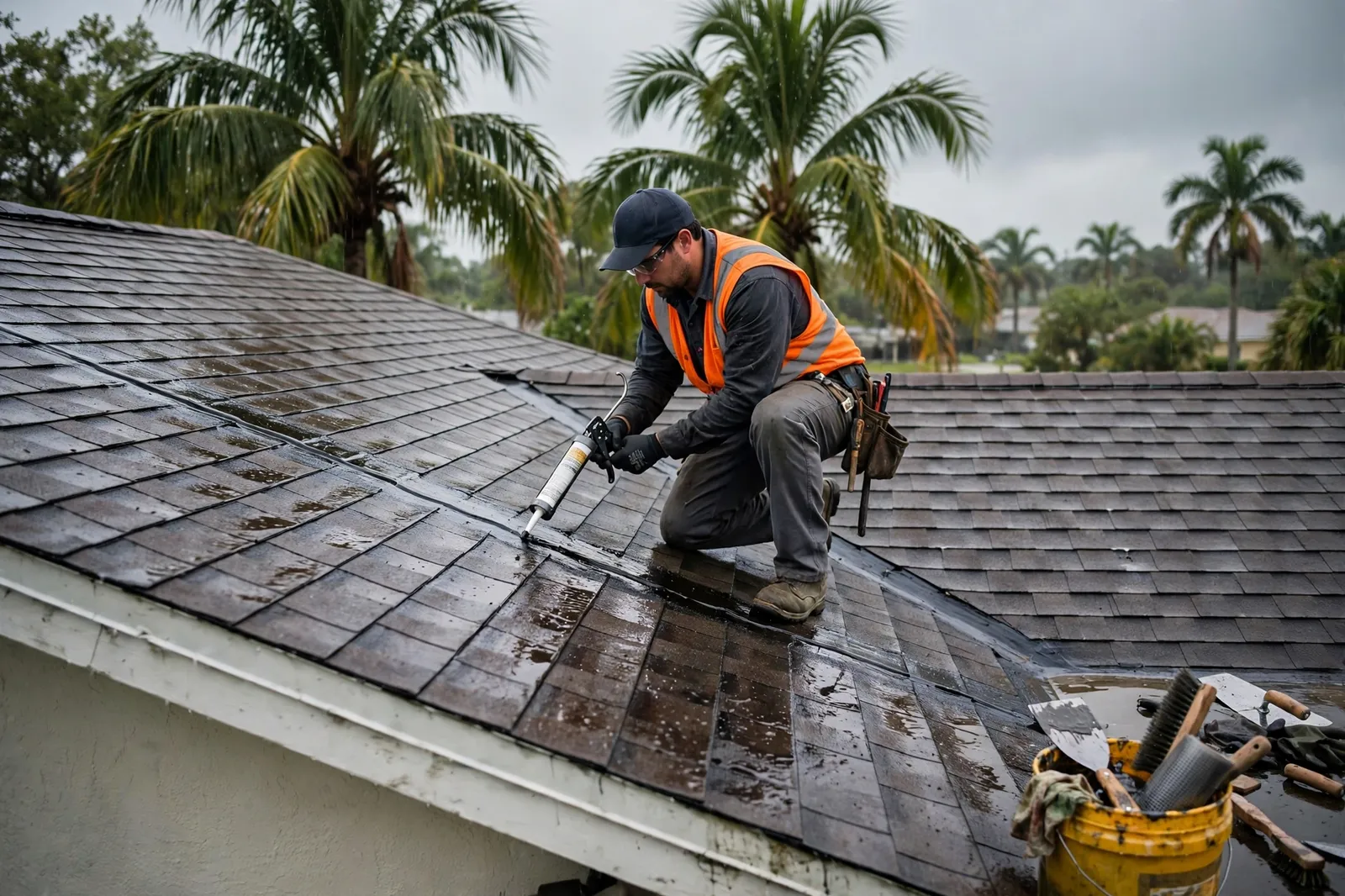
Roof leak repair in Oceanway means tracing the true entry point, usually at flashing, valleys, vent boots, or lifted shingles, and sealing the source instead of just covering the stain. Call (725) 765-9243 and we will connect you with a local contractor who covers Oceanway.
What causes roof leaks in Oceanway homes?
Leak repair in Oceanway is detective work before it is carpentry. The roofer maps the stain, follows the moisture path through the attic, and tests the suspect details upslope until the entry point is proven. Only then does the repair open the roof: failed flashing, boots, or courses are rebuilt, the decking checked for rot, and the section water-tested before the crew leaves.
Oceanway mixes older rural homes on large lots with fast-growing new subdivisions on the north side. Oceanway's open lots and pine stands mean wind exposure and needle load at the same time, and its new builds are hitting their first sealant cycle.
Oceanway sits under the Roof Leak Repair in Jacksonville, FL pillar.
Most leaks start at interruptions in the roof surface: flashing joints, vent penetrations, and valleys. Florida heat splits rubber vent boots, afternoon storms drive rain sideways under lifted tabs, and oak and pine debris dams valleys so water ponds against seams it was never meant to sit on.
How much does leak repair cost in Oceanway?
Minor roof leak repair in Oceanway costs $350 to $1,200, and larger work costs $1,200 to $3,500.
Leak pricing in Oceanway follows the entry point, not the stain. A boot swap at the stack is the cheap end; a valley rebuild or a chimney flashing reconstruction is the dear end. Access matters too: lakefront and two-storey roofs price the same repair higher. The roofer confirms the entry point first, then prices it once, in writing.
Metro pricing context sits in the Jacksonville roof replacement cost guide.
Is the ceiling stain growing?
A growing ceiling stain shows that water remains active or moisture continues moving through nearby materials.
Can a leak wait, or is it an emergency in Oceanway?
A growing stain means water is still moving. Every rain cycle pushes moisture further into decking, insulation, and drywall, and a minor repair can become a larger one within weeks. Active leaks get emergency priority; a stain that has not changed in months still needs tracing before the next storm season.
In Oceanway, calls route along North Main Street and New Berlin Road. The specialist records the address and the roof problem, then matches the call to a roofer whose regular rounds include the area.
Homeowners in Oceanway comparing options can also read the Roof Inspection in Oceanway page for the neighbouring topic.
Nothing about the arrangement is hidden for Oceanway callers. My Jacksonville Roofer is an independent connection service; the contractors are independent businesses with their own licences, insurance, and warranties. The homeowner contracts with the roofer, and (725) 765-9243 is the number that starts it.
Leak Repair near Oceanway
Oceanway sits under the Jacksonville metro pillar. The other fifteen neighbourhoods have their own leak repair pages in the same cluster.
Mandarin Leak repairRiverside Leak repairSan Marco Leak repairSouthside Leak repairArlington Leak repairOrtega Leak repairAvondale Leak repairBaymeadows Leak repairOceanway Leak repairNocatee Leak repairMurray Hill Leak repairSpringfield Leak repairDeerwood Leak repairBartram Park Leak repairNorthside Leak repairWestside Leak repair
Up the cluster
Roof Leak Repair in JacksonvilleThe metro pillar page for this serviceRoof Replacement Cost in JacksonvillePublished ranges for the whole metroRelated help
Roof Replacement Cost in WestsideWhat a new roof costs in that part of JacksonvilleRoof Leak Repair in WestsideSame service in a neighbouring areaRoof Leak Repair in MandarinSame service in a neighbouring areaRoof Leak Repair in OrtegaSame service in a neighbouring areaRoof Inspection in OceanwayEvery slope, the flashing, and the attic, with dated photos and a written summaryRoof Inspection in OceanwayDocumented survey with dated photosHow It Works
How do you book through this site?
1
Call
Call (725) 765-9243 and describe the problem: a leak, storm damage, an aging roof, or a cost question.
2
Get connected
We connect you with an independent roofing contractor who covers your part of the Jacksonville metro.
3
Get your roof assessed
The contractor inspects the roof and gives you their price and timeline directly. You decide whether to go ahead.
Roof Leak Repair questions from Oceanway homeowners
A tarp or bucket buys time, and roofing cement on an obvious lifted tab can slow a drip for one storm. Most DIY seals fail because the entry point is not where the stain is. If the stain grows or returns after rain, the leak needs professional tracing before decking damage spreads.
Tracing and sealing a single entry point usually finishes in one visit of 2 to 4 hours. Valley and flashing rebuilds take most of a day. If the tracing finds deck damage, the roofer explains the added scope and price before any extra work begins.
A specialist records the address, the stain location, and when the leak appears. The specialist connects the homeowner with an independent roofer serving Oceanway who traces and seals the entry point. My Jacksonville Roofer is a connection service, not a roofing company.
Tracing and sealing a single entry point in Oceanway usually falls in the minor repair range of $350 to $1,200. A valley or flashing rebuild sits in the larger range of $1,200 to $3,500. The roofer confirms the exact figure after the entry point is found, because the entry point sets the scope. A water test result is recorded on the job file, so the repair is proven, not assumed. In Oceanway, oceanway's open lots and pine stands mean wind exposure and needle load at the same time, and its new builds are hitting their first sealant cycle.
Water enters high and travels. It runs down decking seams and rafter lines before it finds a path through the ceiling, so the stain can sit several feet from the entry point. That is why leak repair starts with attic tracing instead of patching the shingles above the stain. If tracing finds a second entry point, it is photographed and quoted before any extra work happens.